


 844-436-7691

Keep Your Pets Safe Around Holiday Plants
As the holidays approach, be wary of bringing home certain plants if you have furry companions. As the weather gets colder, animals spend more time indoors and are more likely to get into things they shouldn't, like household plants. Depending on the country, 5% to 11% of all reported pet poisonings come from ingesting household plants, and kittens and puppies are the most susceptible. Owners may not realize their pet is experiencing plant toxicity unless they catch them in the act — so if your pet seems lethargic during the holidays, don't assume it's just an "off" day. Be aware, too, of any plants treated with pesticides. If you're unsure how to proceed, the ASPCA Animal Poison Control is an excellent resource.
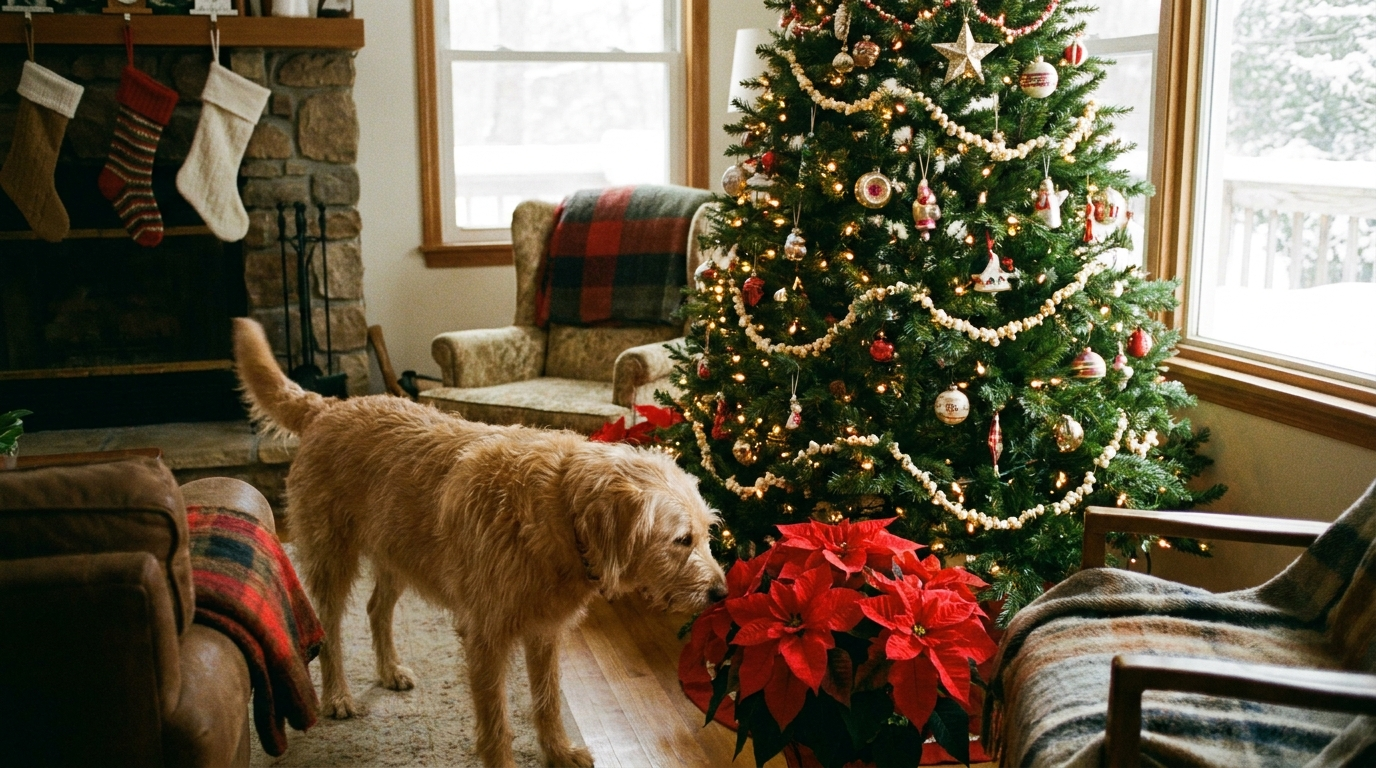
Poinsettia
One of the most familiar holiday plants that causes toxicity in animals is Euphorbia pulcherrima, the poinsettia. Poinsettias aren't safe for cats or dogs to consume, and every holiday season vets see a spike in cases. The main irritant is the milky latex on the leaves, which can attract animals by smell. Licking or eating the waxy coating can lead to vomiting, diarrhea, dermatitis, and eye irritation. If you decorate with poinsettias, keep them well out of reach.
Holly
Another holiday favorite is holly, used on its own, on a tree, or in a wreath. Its leaves are sharp and can injure the digestive tract, and the red berries contain theobromine — the same compound in chocolate — which is dangerous for dogs. Symptoms include nausea, vomiting, and diarrhea, and in some cases changes in blood pressure and heart rate. Seek veterinary care if your pet ingests holly leaves or berries.
Mistletoe
Mistletoe, often hung in a doorway, is unsafe for pets. It contains phoratoxin, which can cause nausea, vomiting, stomach pain, diarrhea, and changes in heart rate and blood pressure. Mistletoe and holly can look similar in their symptoms but are managed differently, so knowing which plant your pet ate helps your veterinarian.
Christmas Trees
A Christmas tree itself isn't highly toxic, but it brings hazards. Sharp needles can irritate the stomach if eaten, and the tree-stand water may harbor bacteria, mold, or fertilizer — cover it with a skirt. Keep pets from chewing light strings (electrocution risk), and remember that ornaments aren't toys: if they break, glass or plastic can injure your pet.
Keeping Pets Safe
Keep pets away from festive plants, and consider realistic faux plants as a safe alternative. If you go with live plants, positive-reinforcement training can help teach pets to steer clear. Looking for training treats? Our organic hemp dog treats double as rewards and support calm during a busy, noisy season.
Frequently Asked Questions
Are poinsettias poisonous to dogs and cats?
Yes, though usually mildly. The milky sap irritates the mouth and stomach and can cause drooling, vomiting, and diarrhea. Keep poinsettias out of reach and call your vet if your pet eats a significant amount.
Which holiday plant is most dangerous to pets?
Holly and mistletoe tend to cause more serious signs than poinsettia — holly for its spiny leaves and theobromine-containing berries, mistletoe for its phoratoxin. All three warrant a call to your vet if ingested.
Is Christmas tree water dangerous for pets?
It can be. The water may contain bacteria, mold, or fertilizer from the tree, so cover the stand with a skirt so pets can't drink it.
What do I do if my pet eats a holiday plant?
Contact your veterinarian or the ASPCA Animal Poison Control Center (888-426-4435) right away, and note which plant and roughly how much your pet ate.
This content is for general safety information and is not a substitute for veterinary care. If you suspect a poisoning, contact your veterinarian or an animal poison control center immediately.
References
- Bertero, A., Fossati, P., & Caloni, F. (2020). Indoor Companion Animal Poisoning by Plants in Europe. Frontiers in Veterinary Science, 7, 487.
- Crampton, L. (2020). Twelve Christmas or Holiday Plants: Poisonous and Safe. Dengarden.
- Elfenbein, H. (2019). Dangerous Winter Holiday Plants for Pets. PetMD.
- Mahaney, D. (2010). Are Holiday Plants Toxic to Your Pet? AKC Canine Health Foundation.


