


 844-436-7691

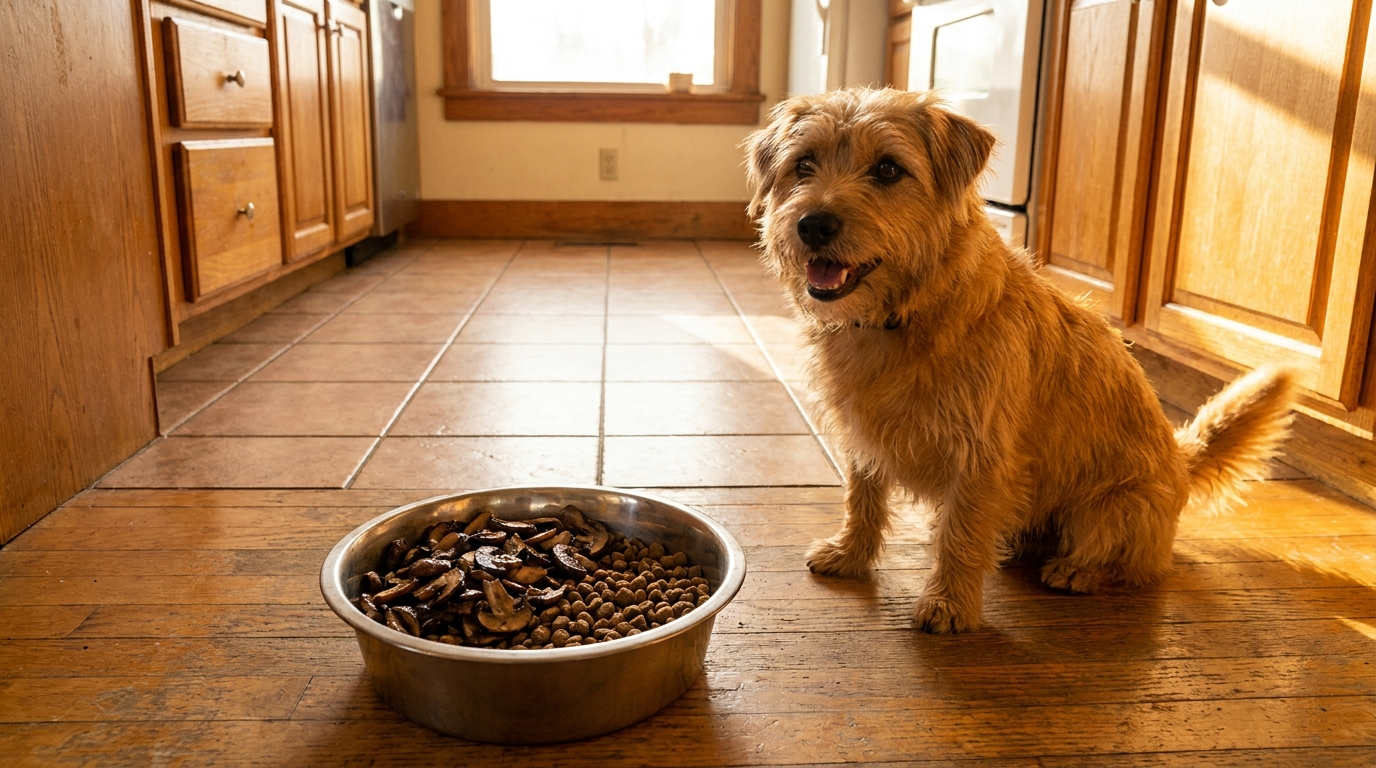
Mushrooms aren't just for human dishes — several varieties are packed with nutrients that can support your dog's wellness. Here are 10 healthy mushrooms for dogs, what each one offers, and how to add them safely.
Why Are Mushrooms Good for Dogs?
Edible and medicinal mushrooms are a great source of vitamins, minerals, antioxidants, and immune-supporting compounds called beta-glucans. They're also low in calories and fat, making them an easy addition to a dog's diet. (Only culinary or supplement mushrooms — never wild ones.)
1. Reishi
Long used in traditional practice, reishi is rich in beta-glucans and antioxidants that support a healthy immune system and a normal inflammatory response — a good choice for dogs who could use extra immune support.
2. Chaga
Chaga is loaded with antioxidants that help protect against oxidative stress, plus beta-glucans for immune support and minerals like potassium and magnesium.
3. Shiitake
Rich in B vitamins for energy and a healthy nervous system, shiitake also contains lentinan, a compound studied for its immune and cellular-health benefits.
4. Maitake
Another antioxidant-rich, beta-glucan mushroom that supports immune health, with vitamins and minerals including B vitamins, potassium, and copper.
5. Lion's Mane
Best known for supporting healthy cognitive function and memory, lion's mane is a popular pick for senior dogs, along with its antioxidant content.
6. Turkey Tail
One of the most studied medicinal mushrooms, turkey tail is rich in antioxidants and beta-glucans for immune support, plus vitamin D and selenium.
7. Cordyceps
Traditionally used to support energy and stamina, cordyceps supports a healthy immune system and is a nice option for active dogs.
8. Porcini
A flavorful culinary mushroom rich in B vitamins and ergosterol, which supports bone health — helpful for older dogs.
9. Oyster
An easy edible mushroom high in antioxidants and beta-glucans, plus B vitamins, potassium, and copper.
10. Enoki
Rich in B vitamins and compounds that support digestion and a healthy gut microbiome — a good choice for dogs with sensitive stomachs.
How to Add Mushrooms to Your Dog's Diet
Add cooked culinary mushrooms to meals in small amounts, or use a dog-specific mushroom supplement. Never feed wild mushrooms — some, like Amanita species, are toxic to dogs. Always introduce new foods gradually and check with your veterinarian first.
Round Out Your Dog's Wellness Routine
Mushrooms pair well with other daily wellness staples. For full-spectrum hemp support — calm, comfort, and everyday balance — explore HempMy Pet's organic hemp for dogs range, grown on our Colorado family farm using organic growing practices.

A gentle, full-spectrum hemp oil to round out your dog's daily wellness routine — organically grown, third-party tested, made on our Colorado family farm.
From $49
Shop Hemp for Dogs →Frequently Asked Questions
Can dogs eat mushrooms?
Dogs can safely eat plain, cooked culinary mushrooms (the kind sold for people) and dog-specific mushroom supplements. Never feed wild or foraged mushrooms — some are highly toxic to dogs.
Which mushrooms are best for dogs?
Reishi, shiitake, maitake, turkey tail, lion's mane, and cordyceps are among the most popular for their antioxidants, B vitamins, and immune-supporting beta-glucans. Culinary options like oyster and porcini are also nutritious.
Can dogs eat raw mushrooms?
It's best to cook them plain (no oil, salt, garlic, or onion). Raw mushrooms are harder for dogs to digest, and cooking makes their nutrients more available.
How much mushroom can I give my dog?
Start small — a spoonful of finely chopped, cooked mushroom mixed into food for a medium dog — and introduce it gradually. Treats and extras should stay a small part of a balanced diet, so check with your vet on amounts.
These statements have not been evaluated by the Food and Drug Administration. This content is for general wellness information and is not intended to diagnose, treat, cure, or prevent any disease. Always consult your veterinarian before changing your dog's diet.


